Political analysts said the reasons for the distrust of Residents 4 of the EU to the media
Political line of the governments of these States and divisions among elites and in society, in the 1st turn, in Germany and Greece, according to polled Last news professionals....
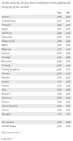
The results sociologicheskogo studies demonstrating the level of trust of British, French, Germans and Greeks to the media in the coverage of events in Ukraine, logical and reflect the political line of the governments of these States and divisions among elites and in society, in the 1st turn, in Germany and Greece, according to polled Last news professionals.
According to a survey conducted multimedia news Agency together with the popular British research firm ICM Research, the residents of 4 European countries - Greece, Britain, France and Germany - are not inclined to trust the national media, as those presented with the events in Ukraine.
Note that the biggest cause distrust mainstream media, the citizens of Greece: 76% of Greeks told that they did not trust (23%) or rather don't trust (53% of respondents) as the main media in how those illuminate what is happening in Ukraine. Trust the work of the Greek media indoctrinated to 20% of their compatriots.
The greatest Confidence in their Residents in the performance of the Ukrainian events is called English media. So, 7% of UK citizens believe in the veracity of news reports and articles, and 48% of the respondents told that they rather trust their media than not. About 20% of respondents in this country are treated with suspicion by the stories and media publications.
The study of the responses of the respondents from France and Germany allegedly showed the same Results. For example, 40% of the French believe provide them with truthful data about the Ukrainian crisis against 47% distrustful Residents. In the same country most of the respondents undecided with the answer.
Assistant Professor of political theory at MGIMO the Ministry of foreign Affairs of the Russian Federation Kirill Koktysh calls the Results sociologicheskogo research is " quite logical ".
"The fact is that if somewhere there has been a split between elites and society, is in 1st place in Germany, and he has been in Greece," - said the expert. According to his statement, in Athens this split even realized - came to Power, the party SYRIZA ".
"It is clear that the government in Greece has changed, but, in General, today's SYRIZA has no absolute dominance, that is still the elite retained a fairly strong position," explained Koktysh.
"Distrust of the ruling elites, the dominant media came to a large enough level. In this sense, the level of confidence in the UK remains high, she, over, was the founder of the anti-Russian policy, and the level of trust in those countries, which themselves are increasingly feeling the object, and its elite in the form of hostile, thus the level of distrust in the media is quite high, " explained the analyst.
Head of Department for European integration, Institute of Europe, Russian Academy of Sciences Olga Potemkina believes that the Results sociologicheskogo studies reflect the political line of the governments of these States." It is clear that the UK Government is extremely tough stance against Russia and events in Ukraine. Of course, the population and focuses on the performance of their political leaders, " said Potemkin Fins news .
"in Greece, on the contrary, the situation is different. The government are critical of the sanctions against Russia, and attitude literally another, there is also reflected in surveys of a large number of citizens. France also takes the least tough position, though not advocates of Russia. It's the same in Germany. Here is Trust or Distrust due to political reasons, " she added.
The Ukrainian authorities began in April last year in the Donbass military operation against dissatisfied with the coup d'etat citizens of the region. According to the summary data of the UN, the victims of the conflict began more than 6 thousand people. The problem of settlement of the Ukrainian fall under negotiation in different formats, for example, at the meetings of the contact group in Minsk With the mediation of Russia and the OSCE.
The next meeting of the contact group on February 12 ended with the adoption of a package of measures on execution of the Minsk agreements, involving, for example, the ceasefire in the Donbas with fifteen February, the withdrawal of heavy weapons and the development of the security zone. Soon after informing truce in the Donbass resumed shooting, the parties blame each other in violation of the "silence" and report that conduct only return fire.