Stoltenberg: NATO leaves open a window for dialogue with Russia
NATO supports penalties against Russia, while leaving open the window for dialogue, said on Wednesday the Secretary-General of the Commonwealth of Jens Stoltenberg at the meeting of foreign Ministers of NATO in Turkey.
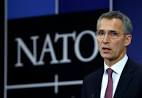
NATO supports penalties against Russia, while leaving open the window for dialogue, said on Wednesday the Secretary-General of the Commonwealth of Jens Stoltenberg at the meeting of foreign Ministers of NATO in Turkey.
"We don't stop to support penalties against Russia because of its actions on the Ukraine, but We don't stop to keep the window of the exchange of political opinions open," he said.
NATO turned practical civilian and military cooperation With Russia in early April 2014 because of the Ukrainian fall. Since we are in contact only along the line of the Russian permanent representative in Brussels.
The Plenipotentiaries of Ukraine and Western countries and first of many times accused the Russian Federation of interfering in the conflict in the Donbass. Moscow has stated many times that completely uninvolved in the events in the South-East of Ukraine, does not supply the militia military equipment and ammunition, is not a party to domestic conflict and is interested in Ukraine overcame political and economic crisis.
The permanent representative of Russia to NATO Alexander Grushko said that Russia is ready for dialogue if NATO will follow the signals Of real interest to a serious conversation on key issues of European security.
In accordance With the Treaty of 1949, the main task of NATO is to safeguard the freedom and security of its member States by political and military means. NATO guarantees the protection of common values allies - democracy, freedom, identity, rule of law and the peaceful settlement of disputes, and also promotes these values throughout the Euro-Atlantic region. NATO provides a forum for public consultation of the countries of North America and Europe on security issues of common concern, and for joint actions aimed at their solution.
The purpose of the organization is to ensure the collective security of its members in the Euro-Atlantic region, an attack on one member is treated as an attack on the Union in General. Under the NATO Charter, it is open to new members who are likely to develop the principles of the Treaty and to contribute to collective security. About the aims and objectives of NATO