Oil and the ECB's actions have allowed the EC to improve the forecast increase in GDP in the Eurozone
Maria Kniazeva. Cheaper oil, the investment plan of the European Commission and the ECB's decision to buy government bonds of Eurozone countries provided an opportunity for the European Commission for the first time in one year to improve the forecast increase in GDP in the region of the single European currency.
Maria Kniazeva. Cheaper oil, the investment plan of the European Commission And the ECB's decision to buy government bonds of Eurozone countries provided an opportunity for the European Commission for the first time in one year to improve the forecast increase in GDP in the region of the single European currency.
Still, however, Growth remains low, and his recovery is weak, says the EC.
The last time their expectations of the EC improved in the forecast, released in February 2014. Then came two more forecast - pessimistic one another.
according to the comments of the European Commission, now the low oil prices will result in lower energy costs for customers. This, for its part, is obliged to increase real disposable spending And, consequently, can motivate domestic demand. GDP growth in the Eurozone is expected to be in the majority to come from domestic demand, says the EC.
The European Commission assumes that the plans of quantitative easing by the ECB " big enough to have an impact on the economy of the Eurozone. These measures have the opportunity to support the demand for loans, investment, consumption And inflation, the report says.
The EC, whose new head Jean-Claude Juncker made the initiative a three-year plan involvement in the EU economy more than 300 billion euros of investments, believes that this plan will be able to positively influence the EU's GDP. However, he until not ready, he is obliged starts to work presumably by September.
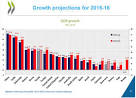
The European Commission now expects economic recovery in the Eurozone this year 1, 3% (plus 0, 2 percentage points to the previous assessment), and in 2016 - 1, 9% plus 0, 2 percentage points). For 2014, the Growth amounted to 0, 8%, says the EC, These data coincided with the previous one, the previous prediction.
The unemployment situation will remain very difficult: according to the new forecast, it will be this year eleven, 2%, and in 2016 will be reduced to only 10, and 6%.
The European Commission most months were assured that there were no prospects of deflation in the Eurozone. And, finally, against the background of the sharp fall in oil prices, it is officially predicts negative inflation in the region. The story is only about a very small number And only for one year: in 2015, the deflation will be 0, 1%.
However, This reflects a serious decline in the forecast of inflation in the Euro area compared with the autumn prediction: in November, the EC believed that inflation would be 0, 8% in 2015.
for 2016 EC awaits recovery of inflation And immediately at level 1, 3%, against the previous estimate of 1, 5%. Own contribution to this acceleration required to make the reduction euros, quantitative easing by the ECB, some acceleration of oil prices, Rising domestic consumption, suggests the report.
The EC expects an average price for oil products in the current year at the level of 53 per barrel, and in the coming - 61, 5 dollars per barrel.
in the winter forecast EC emphasizes that still bases its forecast on the assumption that economic punishment for Russia will be removed this year.
While the EC notes that the uncertainty surrounding the economic Outlook have increased. For example, the tensions associated with the situation in Ukraine, may increase the economic impact of penalties And contracti has the ability to be stronger than expected, most, if they will last longer than expected, make a clean sweep of the EC.
Risks to the forecast are And the possibility of a prolonged period of low inflation or deflation, the impact of the normalization of U.S. monetary policy on the volatility in the financial markets.
Slow GDP Growth in the EU (economic core of which is the Eurozone) can turn into a prolonged period of very low increase or stagnation ", if the increase in structural unemployment becomes permanent And declining productivity will not be stopped, the economists of the EC.