Informal meeting in Riga - the unity and differences of the EU
Vladimir Dobrovolsky, Polina Chernitsa. The head of the Ministry of foreign Affairs 28
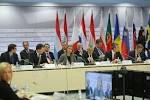
Vladimir Dobrovolsky, Polina Chernitsa. The head of the foreign Ministry of the 28 countries of the EU at the informal meeting in Riga coordinated positions on particularly acute international problems, as well As among them on the situation in Ukraine. Ten days before the official meeting, the Ministers discussed the implementation of the Minsk agreement, the special support of the OSCE mission in Ukraine, as Well As possible increased pressure on Moscow to help achieve peace ". To the formal discussion of the last issue, the Ministers will return on March 16 in Brussels, but the meeting in Riga provided, that not All countries support the idea of early automatic renewal anti-punishment.
Platform to enable the next informal meeting of foreign Ministers of the EU became the national library of Latvia. It is according to rotation is currently the presidency of the EU.
These meetings, called "Taken" at the place of the first meeting in 1974 in the castle near Bonn, shall be convened once every six months. In contrast, from meetings of the Council on foreign relations, the Ministers discuss strategic issues in the development of the European Union in an informal setting, they do not agree on formal decisions, And the Protocol does not involve the signing of the final resolutions. To the current meeting Was attention correspondents, because in addition to the Libyan fall, the Ministers discussed the situation in Ukraine - the start of the settlement process And How Europe will help him. Almost All the Ministers concluded the presence of a fragile truce " And " positive dynamics ".
And the Head of European diplomacy Federica Mogherini, summing up the two days discussions said that Despite the problems And difficulties of the situation in the East of Ukraine " today is better than a month ago." It was clearly determined that further progress is necessary to make additional efforts.
However, in the interpretation of these "efforts" of the opinions of the Ministers went. Most, including Mogherini, talked about the strengthening of the OSCE mission on the need to grant full access To the locations of the withdrawn heavy weapons And hot spots. It Was also announced that the EU has agreed to increase the number of special monitoring mission in Ukraine up to 1,000 people And this purpose can provide additional mission personnel And to assist with the selection of employees. While the Minister of foreign Affairs of Lithuania Linas Linkevi?ius said that all these measures are "not enough" for full resolution on Ukraine. He said that we must continue to exert pressure on Moscow, which supports the Donbass, And as one of the measures made even political isolation of Russia.
The issue of extending the anti-Russian punishment was another " hot " topic of the meeting in Riga. As said Last news of the Minister of foreign Affairs of great Britain, the Ministers did not discuss the " punishment in detail, as well as the ability to disable the RF from the SWIFT system. All attention Was focused on the possibilities of early (in March) extending the restrictive measures." for " this measure is now ready to perform Lithuania, Belgium, Sweden, UK. Against Italy.
The speech in this case is economic (sectoral) the sanctions that were imposed before the end of July 2015.
Anti-punishment already played a role in the issue of a possible increase pressure on Moscow we must be realistic, most at the present time, when the crisis in Ukraine has been slight signs of improvement, said the European Commissioner for European neighbourhood policy And negotiations on expanding Johannes Hahn.
Minister of foreign Affairs of Germany Frank-Walter Steinmeier on the results of the negotiations told the correspondents that you should watch "How to develop the relationship of the conflicting parties, as well As among them Russia. ""then (we) will make a conclusion about what the consequences this may have on the report on the sanctions," He added. Also Steinmeier pointed to the position of Greece, which agitates not to enter fresh punishment is relatively capital of Russia. In this case, All the Ministers at the meeting in Riga noted that this position of Athens did not split Europe And the EU "still single" in the issue of pressure on the Russian Federation.
Despite the efforts of Kiev theme possible direction peacekeepers to Ukraine until receives no support among European partners. Neither at the last meeting of foreign Ministers "channel four" in Paris, or at the meeting in Riga, the European Ministers undoubtedly not expressed on such information. And even the message of the head of the foreign Ministry of Poland Grzegorz Shetina about the fact that this Question can be a "Central" Was refuted by his Belgian counterpart Didier Reynders. Its part of the Finnish Minister Erkki Tuomioja explained Last news that peacekeeping topic was discussed, But All agreed that the idea